
 Pin It
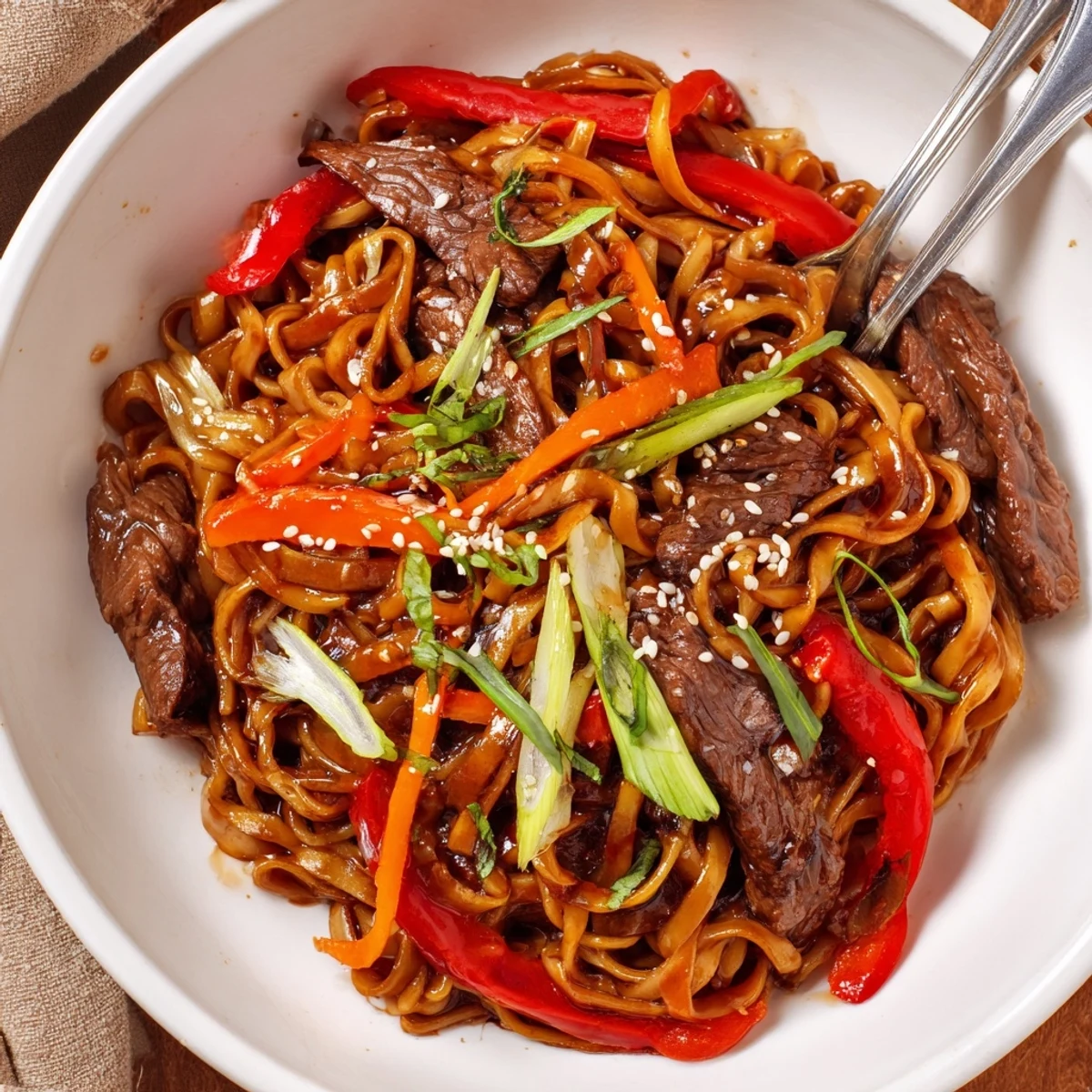
 Marinated beef strips are seared over high heat, then reunited with chewy egg noodles and crisp-tender vegetables. A glossy hoisin-and-soy glaze finishes the pan, coating everything in a sweet-savory sheen. From marinade to plate in about 30 minutes, it's ideal for weeknight cooking. Swap in tofu or rice noodles for dietary needs and finish with toasted sesame and fresh herbs.
The sizzle of beef in a hot wok always brings a sense of excitement to my kitchen. When I first played around with sticky noodles, the aroma of star-anise-laced sauces drifting through the air told me I'd stumbled upon something addictive. This isn't the dish that waited for special occasions—it became my answer on days when I craved deep, glossy comfort with minimal fuss. Quick, satisfying, and just a little bit indulgent, these sticky beef noodles surprised me with their instant crowd-pleasing powers.
The first time I made these noodles for a group of my friends, we ended up eating straight from the wok with chopsticks while standing in the kitchen. Someone joked that the sticky glaze on our lips was just a sign we were doing it right. It was a humid summer evening, and the messier the table, the better the memories. That offhand gathering is now the benchmark for all my casual dinner nights.
Ingredients
- Beef sirloin or flank steak: Thin slicing is key for quick searing and tenderness, and freezing the steak for 20 minutes makes it easy to slice paper-thin.
- Soy sauce (for marinade): Balances saltiness with umami; I reach for low-sodium for a cleaner taste.
- Cornstarch: The secret to a velvety coating and glossy beef, just be sure to mix it in thoroughly.
- Sesame oil: Only a splash livens the marinade with a nutty perfume—always use toasted sesame for best results.
- Freshly ground black pepper: Adds a subtle warmth that doesn’t overpower.
- Egg noodles (or rice noodles): Fresh if you want extra chew; rice noodles work for gluten-free but require a careful eye to prevent sticking.
- Red bell pepper: Brings color and crunch with a mild sweetness; slice as thinly as the beef for balance.
- Carrot: Julienne for slight crunch and earthy-sweet notes.
- Spring onions: Add bite and brightness; I save a few green tops as garnish for extra freshness.
- Garlic: Don’t rush the mincing—fine pieces guarantee even flavor release in the wok.
- Ginger: Grated fresh gives clean heat; a knob the size of your thumb is perfect.
- Hoisin sauce: Lends sweetness and a deep, almost plummy flavor to the sticky sauce.
- Dark soy sauce: Just a bit colors the noodles and adds depth—don’t substitute with light soy or you’ll miss that toffee hue.
- Oyster sauce: A splash goes a long way for savory richness (omit for shellfish allergies).
- Honey: Smooths the sauce and gives the noodles a shiny finish without being too sweet.
- Water: Just enough to loosen and meld the sticky sauce before tossing.
- Toasted sesame seeds: Sprinkle over at the end for crunch and a burst of aroma; toast your own for more fragrance.
- Fresh coriander or scallions: A scattering of green just before serving adds freshness and color that lifts the dish.
Instructions
- Marinate the beef:
- In a roomy bowl, toss beef strips with soy sauce, cornstarch, sesame oil, and black pepper until slick and evenly coated. Let this mingle for ten minutes while you prep your vegetables—the beef will bloom with flavor.
- Cook the noodles:
- Boil a big pot of water, add noodles, and stir gently until just al dente; don’t overcook since they’ll finish in the wok. Drain and rinse under cool water so they don’t stick (a key step for glossy noodles later).
- Mix the sticky sauce:
- In a small bowl, whisk together hoisin, dark soy, oyster sauce, honey, and water until smooth and shiny—taste a drop for balance and adjust if needed.
- Sear the beef:
- Heat your wok over high flame until wisps of smoke rise, swirl in a little oil, then add beef in a single layer—don’t crowd it. Sear just until browned at the edges (about 90 seconds), then scoop out to a plate.
- Stir-fry the aromatics & veg:
- In the same hot wok, add a touch more oil if it looks dry; tumble in garlic and ginger and stir until fragrant. Toss in peppers, carrots, and spring onions and stir-fry briskly until veggies are vivid and just-tender.
- Return the beef and add sauce:
- Slide seared beef back in, drizzle with sticky sauce, and toss everything until beef and veggies are coated and sauce bubbles—smell for that caramel edge.
- Add noodles and finish:
- Tip in the noodles and grab your tongs—you want every tangle silky and well-coated. Toss over high heat until noodles are glossy and everything’s steaming, about two minutes.
- Garnish and serve:
- Scatter toasted sesame and chopped herbs over the top just before eating; serve hot and watch them disappear fast.
 Pin It
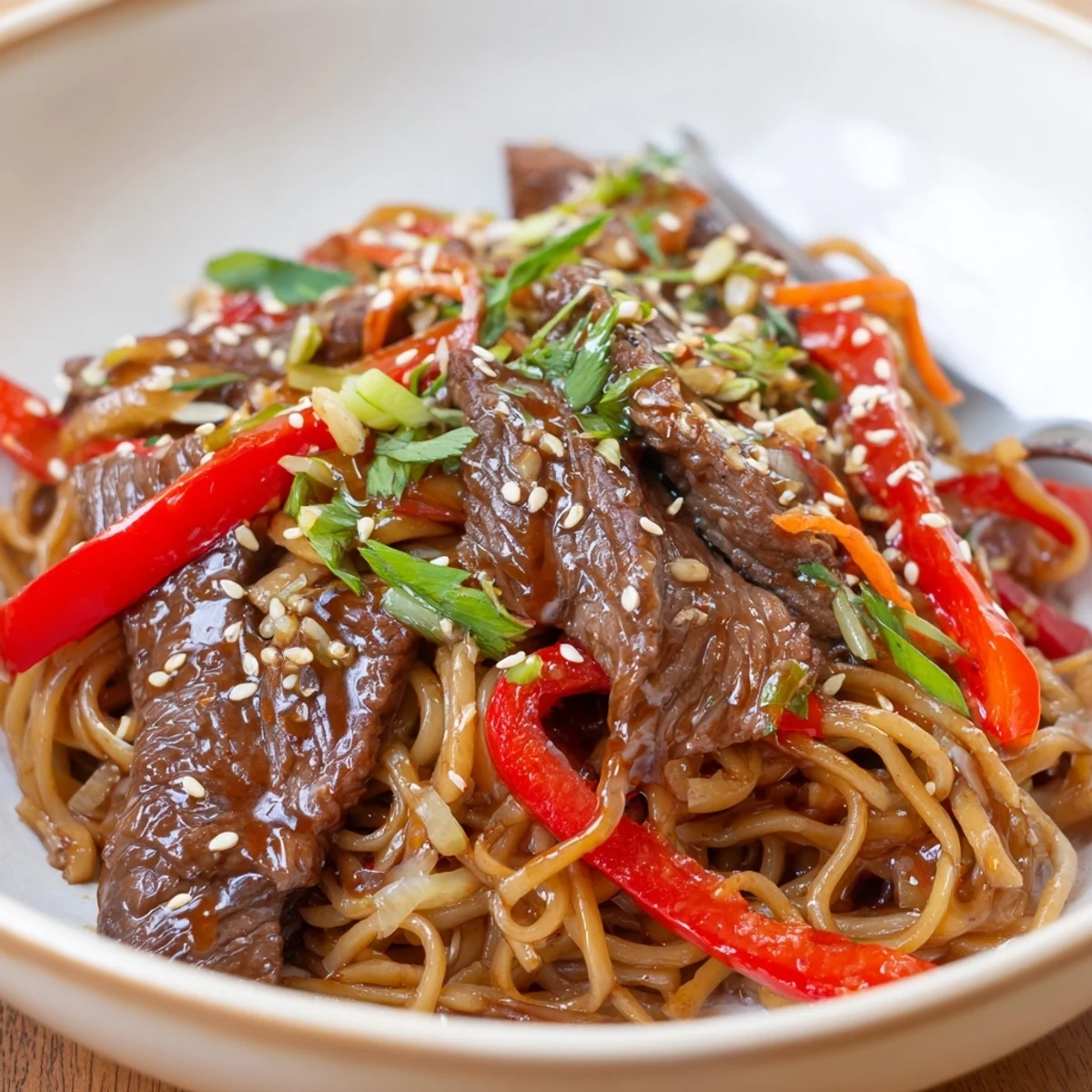
 The night I let the sauce bubble a bit too long and thought I'd ruined dinner, it turned out to be the happiest accident—the caramelized bits at the bottom became everyone’s favorite part. Since then, I always let the sauce linger a second longer on the heat before swirling in the noodles. It’s often those kitchen stumbles that make a good dish unforgettably yours. To this day, someone always asks for the 'crispy bits' with their serving.
How to Make It Your Own
Noodle bowls like this love improvisation—a leftover handful of snap peas or mushrooms slides in with no drama. Swap out beef for chicken or tofu for a different twist, or throw in some chili to kick up the heat if your table leans spicy. Use what’s on hand, and don’t stress if you’re missing a veggie or two; the sticky-sweet sauce ties it all together anyway.
Tools and Shortcuts Worth Mentioning
If you don’t have a wok, a nonstick skillet with high sides will still do the trick—just make sure to get it properly hot. Pre-sliced stir-fry beef from the butcher can shave minutes off prep time on a busy night. And if you’re really hustling, bottled stir-fry sauce works in a pinch, though the homemade sticky sauce here is worth two extra minutes for flavor.
Frequently Asked Questions (Answered from My Kitchen)
Can you make this gluten-free? Absolutely—just sub in rice noodles and gluten-free sauces. Is it kid friendly? My niece swears by it (though she picks out the spring onions). Does it reheat well? Only if you add a drizzle of water and heat gently so the sauce stays silky.
- Toss noodles just before serving for gloss and texture.
- A squeeze of lime wakes everything up if you like a sharp finish.
- Leftovers make an amazing lunch, so always save a portion.
 Pin It
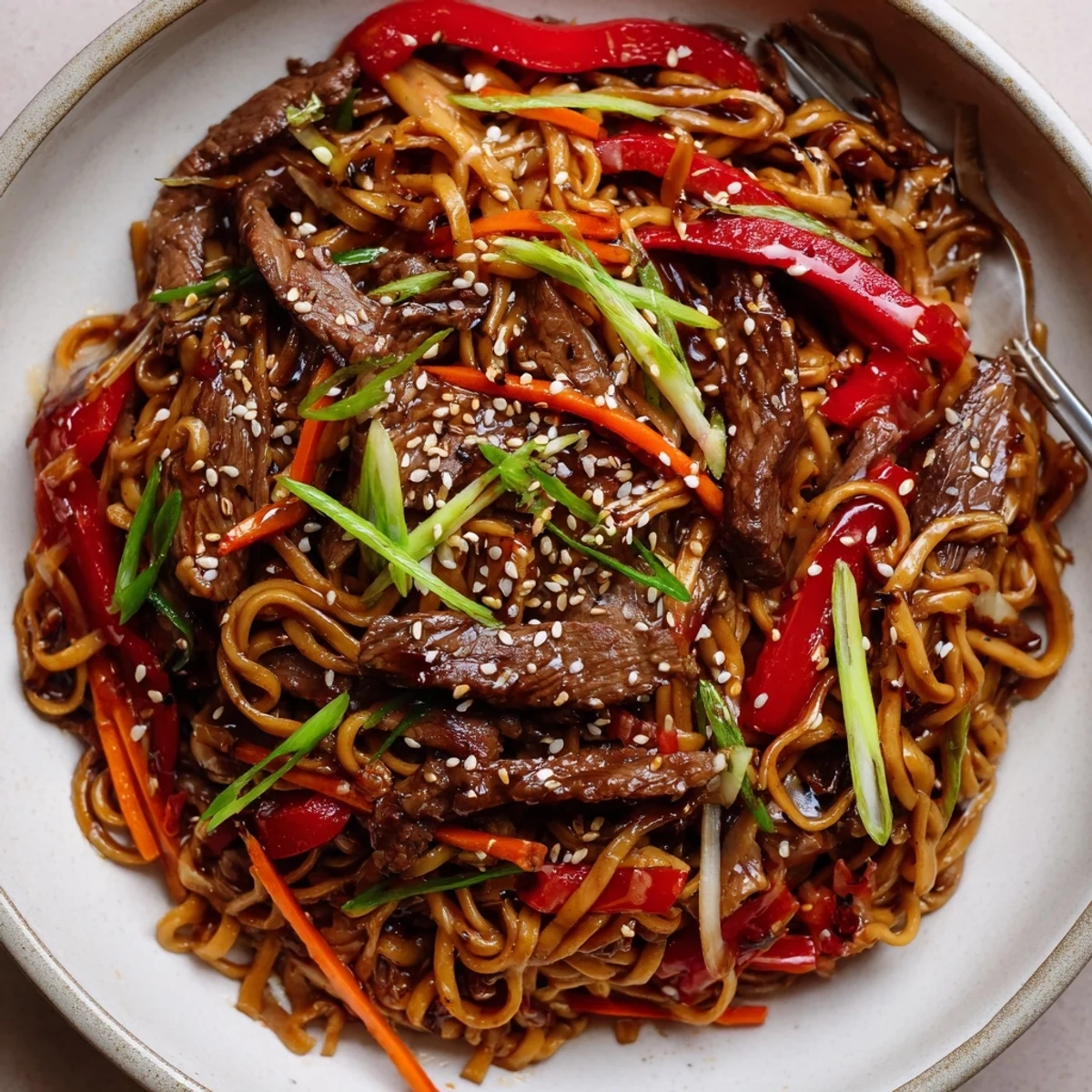
 There’s something quietly thrilling about bringing a dish so full of flavor to the table in under half an hour. If you end up with sticky fingers and a lively kitchen, you’ll know you did it right.
Recipe FAQs
- → How long should the beef marinate?
-
A quick 10-minute toss with soy and cornstarch firms the surface and helps the meat brown; for deeper flavor, let it sit up to 1 hour refrigerated.
- → What noodles work best?
-
Fresh egg noodles give chewy texture and hold sauce well; dried egg noodles or rice noodles (for gluten-free) also work—cook to al dente before tossing.
- → How do I keep the sauce glossy and sticky?
-
Use a balance of hoisin, dark soy, and a touch of honey plus a little water. High heat and a short final toss evaporate excess liquid and create a shiny glaze.
- → Can I swap the beef for another protein?
-
Yes. Thinly sliced chicken cooks similarly; firm tofu pressed and pan-seared is a great vegetarian swap—adjust cooking times accordingly.
- → How should leftovers be stored and reheated?
-
Cool to room temperature, refrigerate in an airtight container up to 3 days. Reheat in a hot skillet with a splash of water or oil to restore gloss and separate strands.
- → Any tips for making this gluten-free?
-
Use rice noodles and replace soy, hoisin, and oyster sauces with certified gluten-free versions or tamari and gluten-free hoisin alternatives; check labels for cross-contaminants.