 Pin It
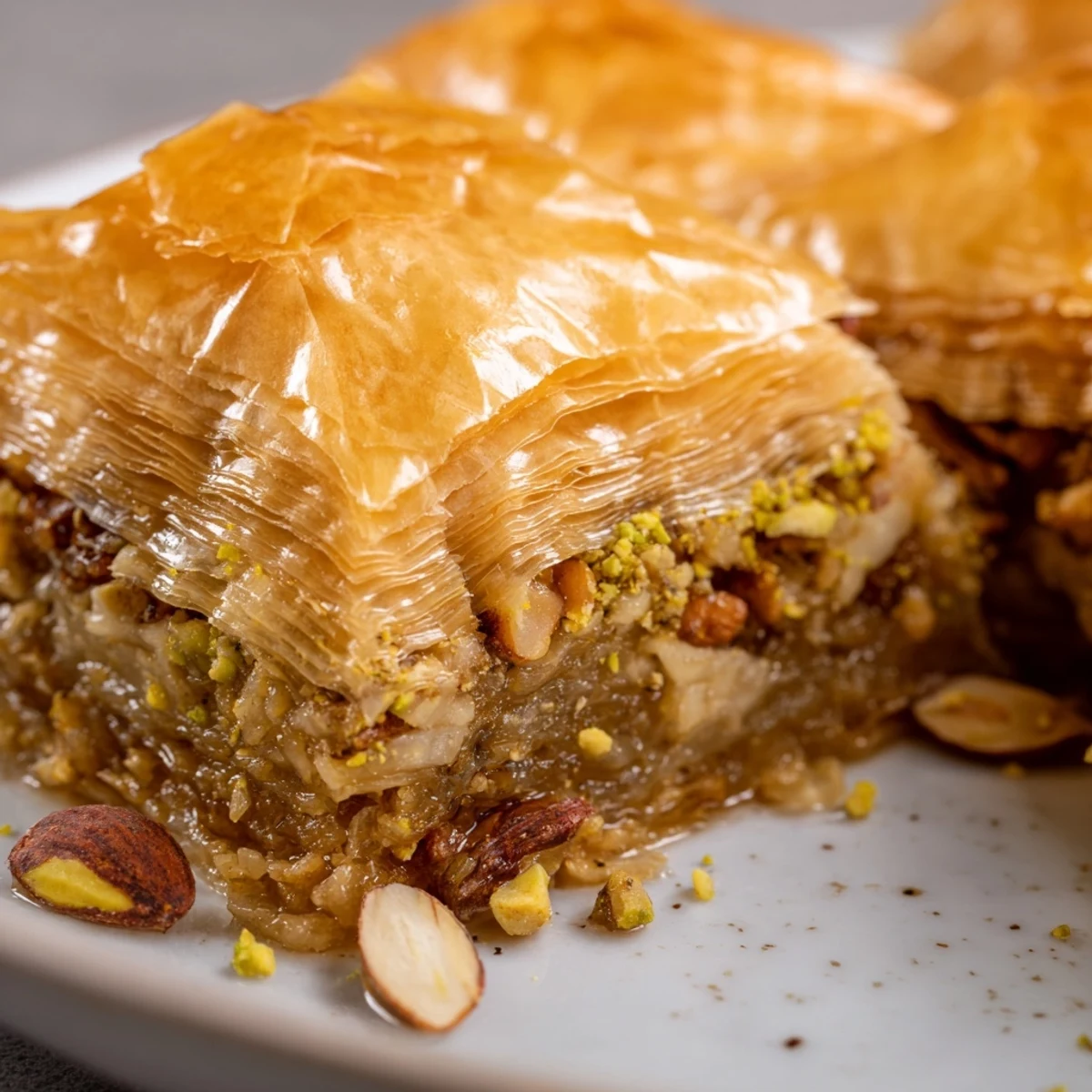
 This traditional Greek dessert features delicate layers of buttery phyllo pastry stacked with a aromatic mixture of finely chopped walnuts, pistachios, almonds, cinnamon, and cloves. The assembled pastry is baked until golden and crisp, then immediately drenched in warm honey syrup infused with cinnamon stick and lemon peel. The syrup seeps into every layer, creating that signature moist and syrupy texture while maintaining a satisfying crunch.
Baklava requires some patience to assemble, but the process is straightforward. The key is working quickly with the phyllo sheets, keeping them covered to prevent drying, and brushing each layer generously with melted butter. Cutting the pastry before baking ensures clean edges and allows the syrup to penetrate evenly.
For best results, let the baklava cool completely before serving. The flavors deepen and the texture improves after a day, making it an excellent make-ahead dessert for gatherings.
The first time I attempted baklava, I worked in complete silence, convinced that breathing too heavily would make those delicate phyllo sheets tear. My grandmother watched from the doorway, eventually laughing as she explained that phyllo is more forgiving than we think, and that a few tears never hurt anyone. That afternoon taught me that the real magic happens in the layering, the patience, and that incredible moment when hot syrup hits crisp pastry and fills the whole kitchen with the scent of honey and warm nuts.
I brought this to a neighborhood potluck last winter, still slightly warm from the oven, and watched it disappear in minutes. My neighbor Maria, who grew up in Athens, took one bite and closed her eyes, saying it reminded her exactly of her mothers kitchen, which might be the best compliment I have ever received.
Ingredients
- 200 g walnuts, 100 g pistachios, and 50 g almonds: The triple nut blend creates depth and texture, with walnuts providing earthiness, pistachios adding subtle sweetness, and almonds contributing crunch
- 2 tsp ground cinnamon and 1/4 tsp ground cloves: These warm spices bridge the gap between the rich nuts and the honey syrup, creating that signature aromatic balance
- 400 g phyllo dough: Keep it covered with a damp cloth while working, as dried out phyllo becomes brittle and difficult to handle
- 200 g unsalted butter, melted: Brush every single layer generously, because butter is what creates those irresistible flaky, shatteringly crisp layers
- 250 g sugar, 200 ml water, and 180 g honey: This syrup ratio hits the perfect sweet spot without overwhelming the delicate pastry
- 1 cinnamon stick and 3 strips lemon peel: Infuse the syrup while it simmers, then remove before pouring to keep the texture clear and smooth
Instructions
- Preheat and prepare your workspace:
- Heat your oven to 170°C (340°F) and grease a 23x33 cm baking dish with melted butter. Clear a large workspace and have everything ready before you unroll that phyllo.
- Mix the nut filling:
- Combine all the nuts with cinnamon, cloves, and sugar in a bowl. The sugar helps the nuts caramelize slightly as they bake, creating little pockets of crunch throughout.
- Layer the foundation:
- Place one phyllo sheet in the dish, brush with butter, and repeat until you have 8 sheets total. Do not worry about perfect edges, just keep them relatively even.
- Add the first nut layer:
- Sprinkle one third of your nut mixture evenly across the buttered phyllo. Press down gently to help the nuts settle into the layers.
- Build the middle layers:
- Add 4 more buttered phyllo sheets, then another third of the nuts. Repeat with another 4 buttered sheets and the remaining nuts.
- Finish with a crisp top:
- Layer the final 4 phyllo sheets, buttering each one, and give the top an especially generous brushing. This top layer will become beautifully golden.
- Score before baking:
- Use your sharpest knife to cut diamonds or squares all the way through. Cutting now is much easier than trying to cut through crisp baked layers later.
- Bake until deeply golden:
- Bake for 45 to 50 minutes until the top is a rich amber color. The kitchen should smell like butter and toasted nuts, and the pastry should feel dry to the touch.
- Simmer the syrup:
- While the baklava bakes, combine sugar, water, honey, cinnamon, and lemon peel in a saucepan. Simmer for 10 minutes until slightly thickened, then cool slightly.
- The moment of truth:
- Pour the warm syrup evenly over the hot baklava as soon as it comes out of the oven. You will hear it sizzling, and that is exactly what you want.
- Patience pays off:
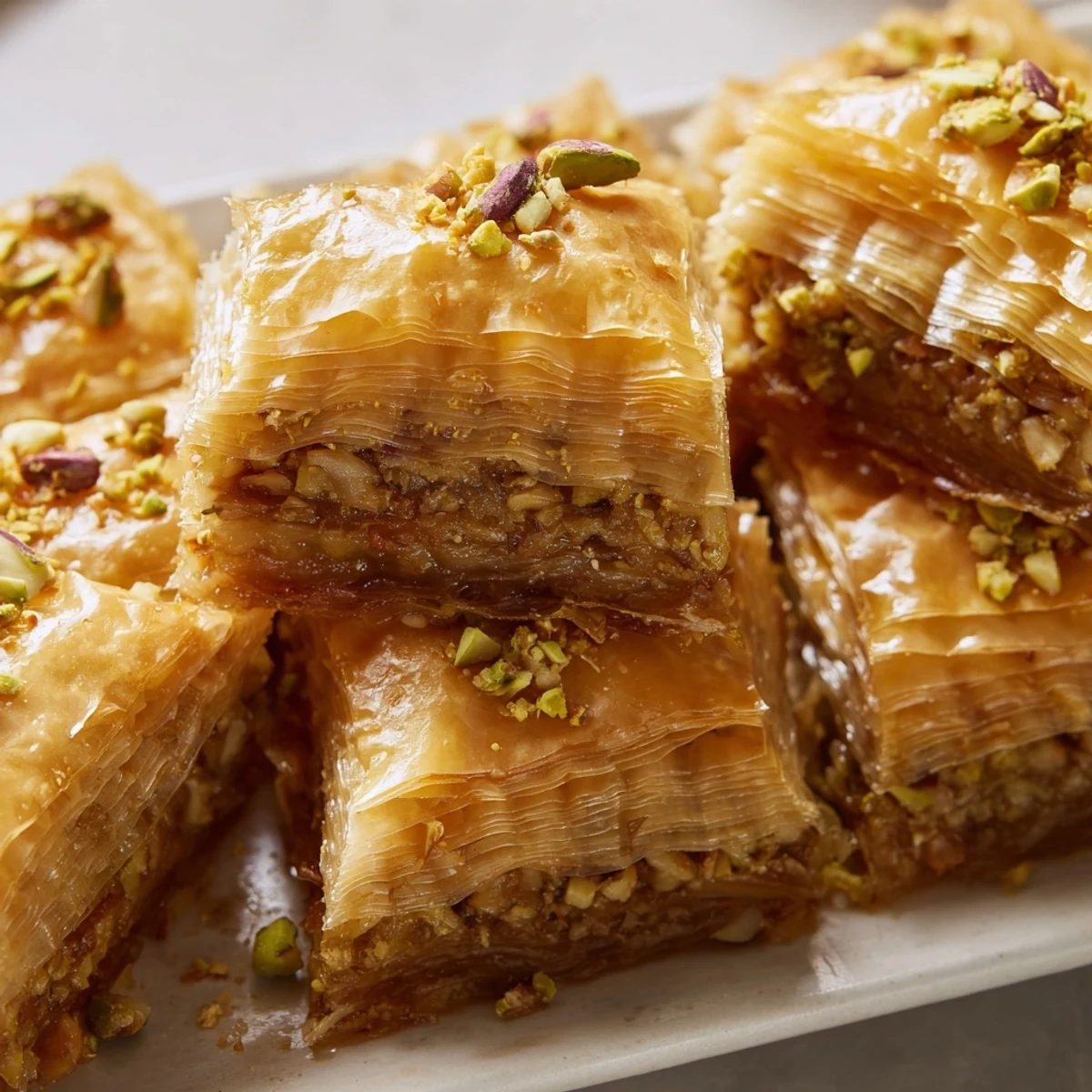
- Let the baklava cool completely in the dish. The syrup needs time to work its way through every layer, transforming crisp pastry into something tender and luxurious.
 Pin It
 My aunt once tried rushing the cooling process and ended up with beautifully crisp but sadly dry baklava, a mistake she never made again after realizing that the waiting is actually part of the cooking process.
Making It Your Own
Sometimes I swap the cinnamon stick for a whole star anise if I want a slightly different aromatic note, or I add a tiny splash of orange blossom water to the syrup for floral complexity. The nuts can also be adjusted based on what you have, though I always keep walnuts as the base.
Serving Suggestions
Baklava needs something to cut through the sweetness, and I have found that strong black coffee or mint tea are absolutely perfect companions. In Greece, it is often served with a glass of cold water to cleanse the palate between bites.
Storage and Timing
Unlike most baked goods, baklava actually improves after a day or two as the syrup continues to soften the layers and meld the flavors. Keep it covered at room temperature, where it will happily last for up to five days, assuming it does not get eaten first.
- Use a sharp serrated knife for the cleanest cuts through the layers
- Let the syrup cool for about 15 minutes before pouring, but do not let it get cold
- The baklava is ready to serve when it reaches room temperature
 Pin It
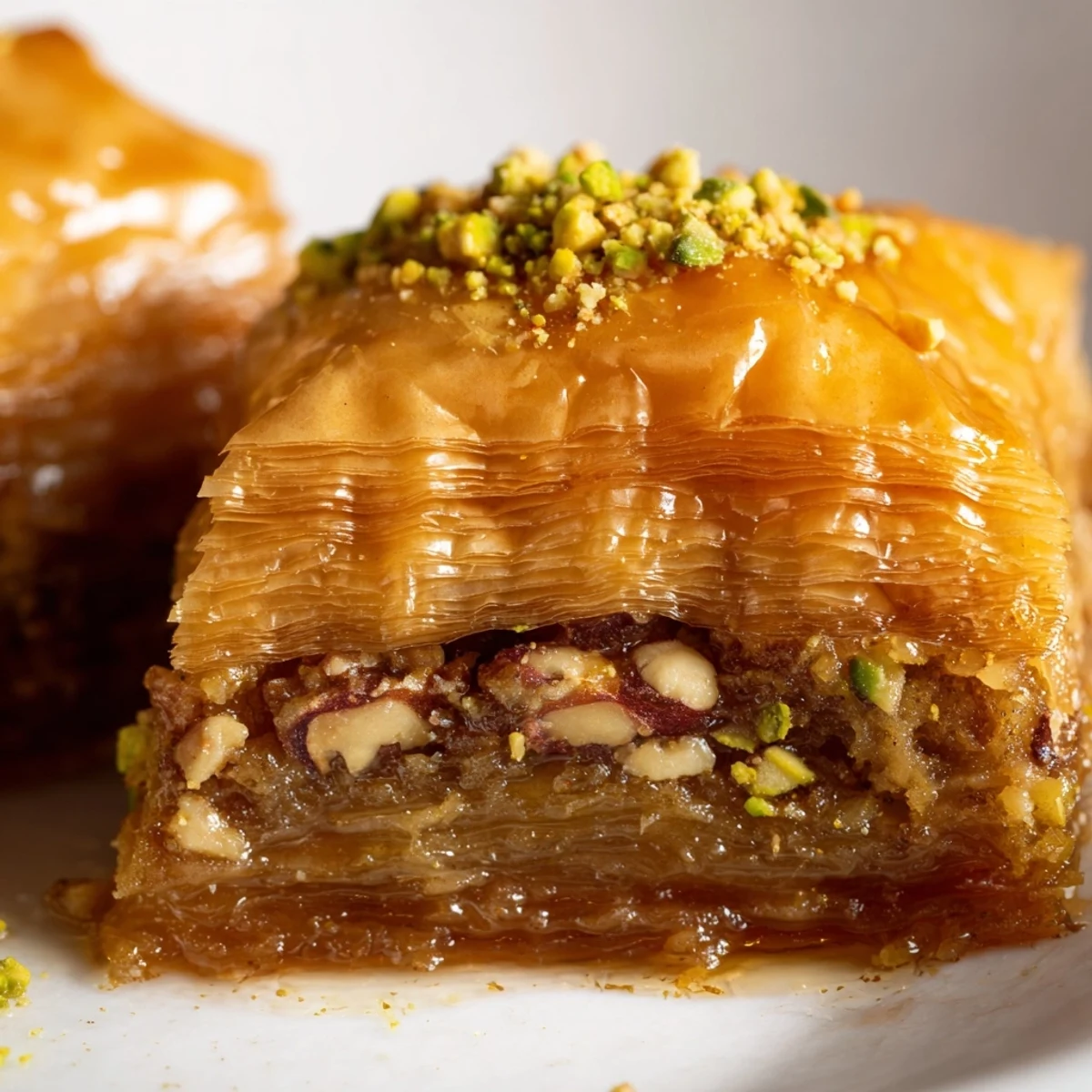
 There is something deeply satisfying about serving baklava to friends and watching their faces light up at that first impossibly sweet, impossibly flaky bite.
Recipe FAQs
- → How do I prevent phyllo dough from drying out while working?
-
Keep unused phyllo sheets covered with a lightly damp clean kitchen towel or plastic wrap. Work quickly but carefully, removing only one sheet at a time. If sheets do dry out and crack, they can still be used in the middle layers where appearance matters less.
- → Why must the syrup be cooled slightly before pouring over hot baklava?
-
Pouring warm syrup over hot baklava ensures even absorption. If the syrup is boiling hot, it may make the pastry soggy too quickly. If completely cold, it won't penetrate properly. The slight temperature difference helps the syrup soak gradually into all layers while maintaining crispness.
- → Can I substitute different nuts in the filling?
-
Absolutely. While walnuts and pistachios are traditional, you can use hazelnuts, pecans, cashews, or a combination. Keep the total nut quantity the same. Almonds provide a nice neutral base, while hazelnuts add a rich, earthy flavor.
- → How long should baklava sit before serving?
-
Allow baklava to cool completely at room temperature for at least 4-6 hours before serving. For optimal texture and flavor, let it sit overnight. The syrup needs time to fully saturate all layers, and the flavors meld beautifully after resting.
- → Can baklava be frozen for later?
-
Yes, baklava freezes well. Wrap individual pieces or the whole tray tightly in plastic wrap and aluminum foil before freezing for up to 3 months. Thaw at room temperature in the wrapping. For best texture, add the syrup after freezing and thawing.
- → What's the purpose of cutting baklava before baking?
-
Cutting through all layers before baking ensures clean, sharp edges. Cutting after baking can cause the top layers to shatter or the filling to spill out. Pre-cutting also allows the hot syrup to penetrate evenly into every piece.