
 Pin It
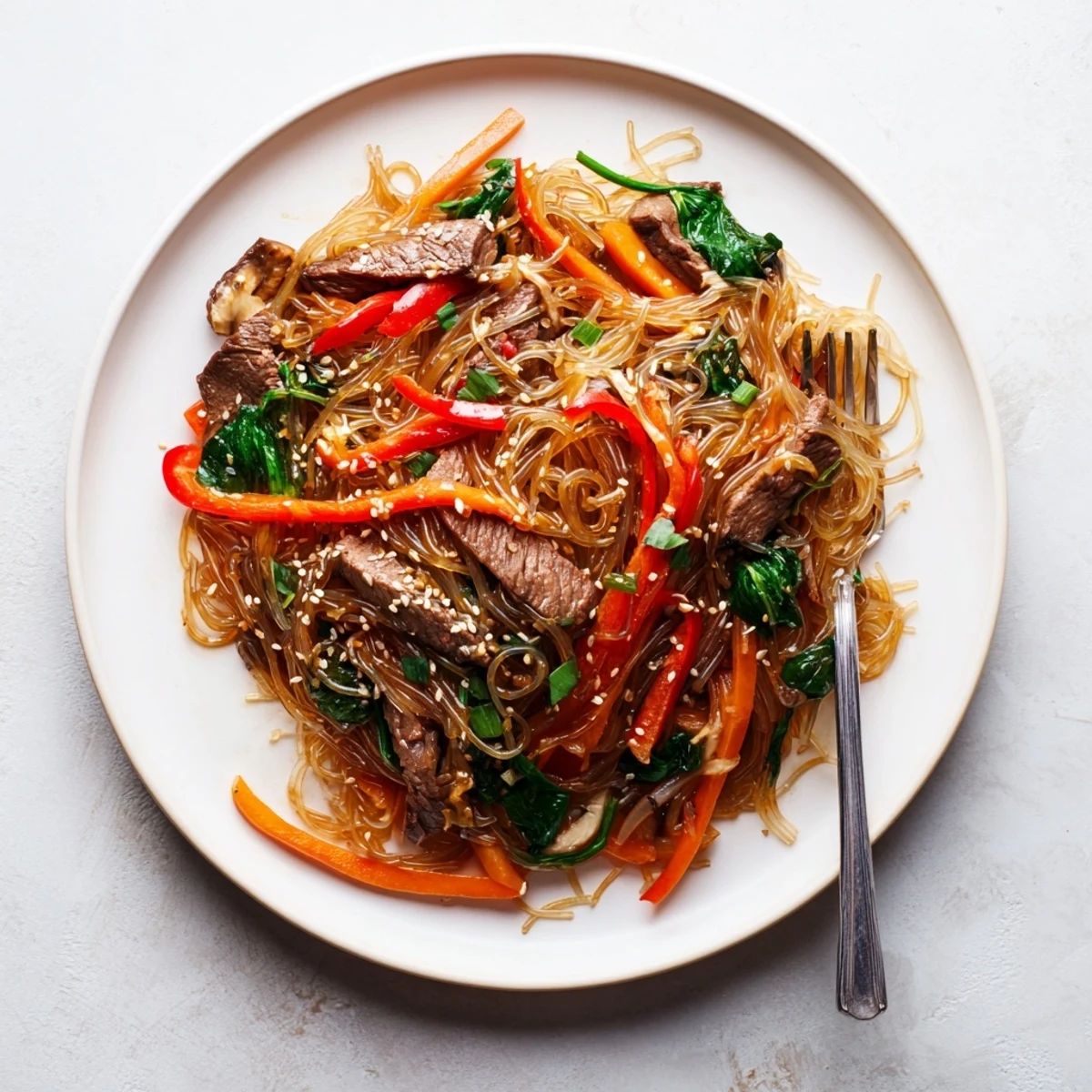
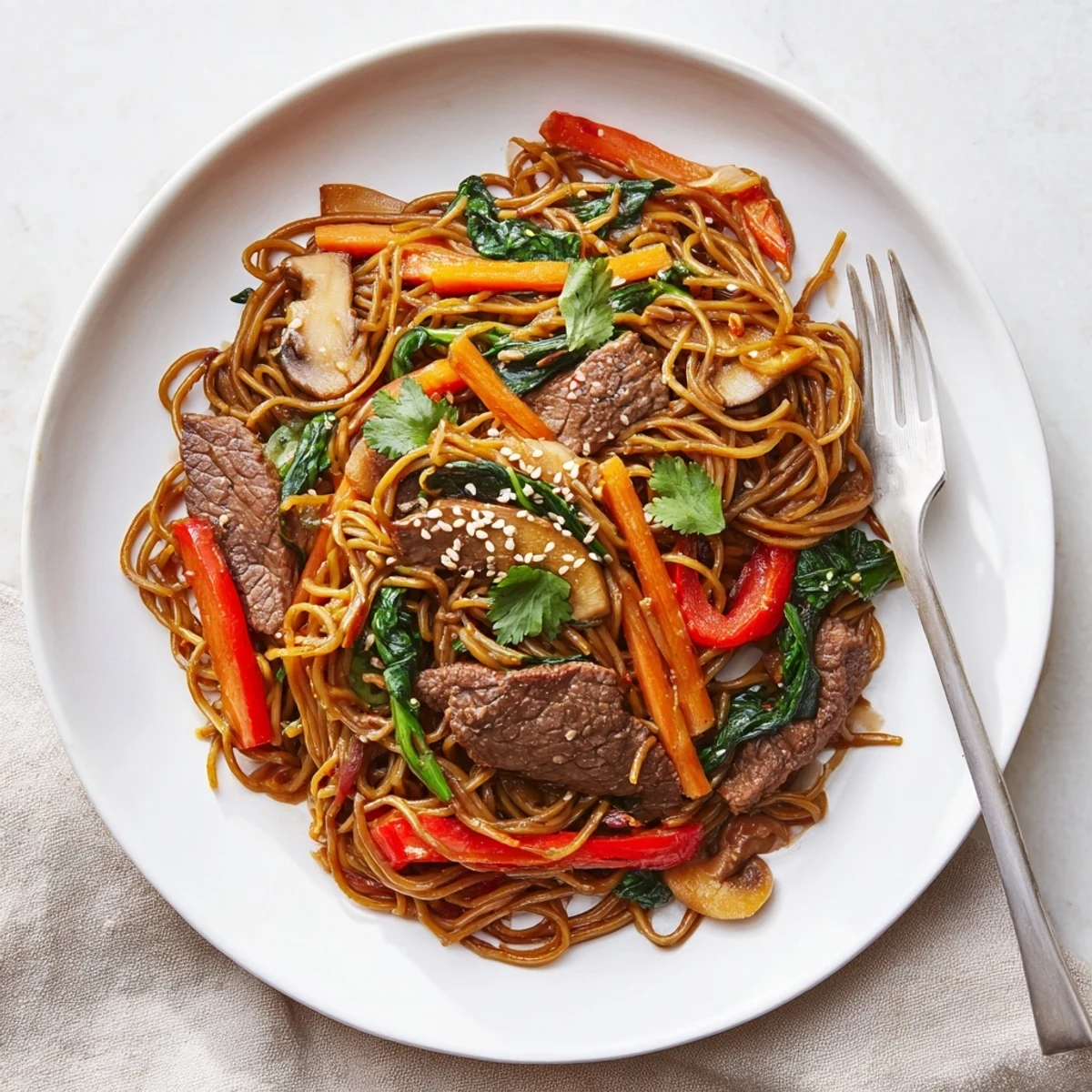
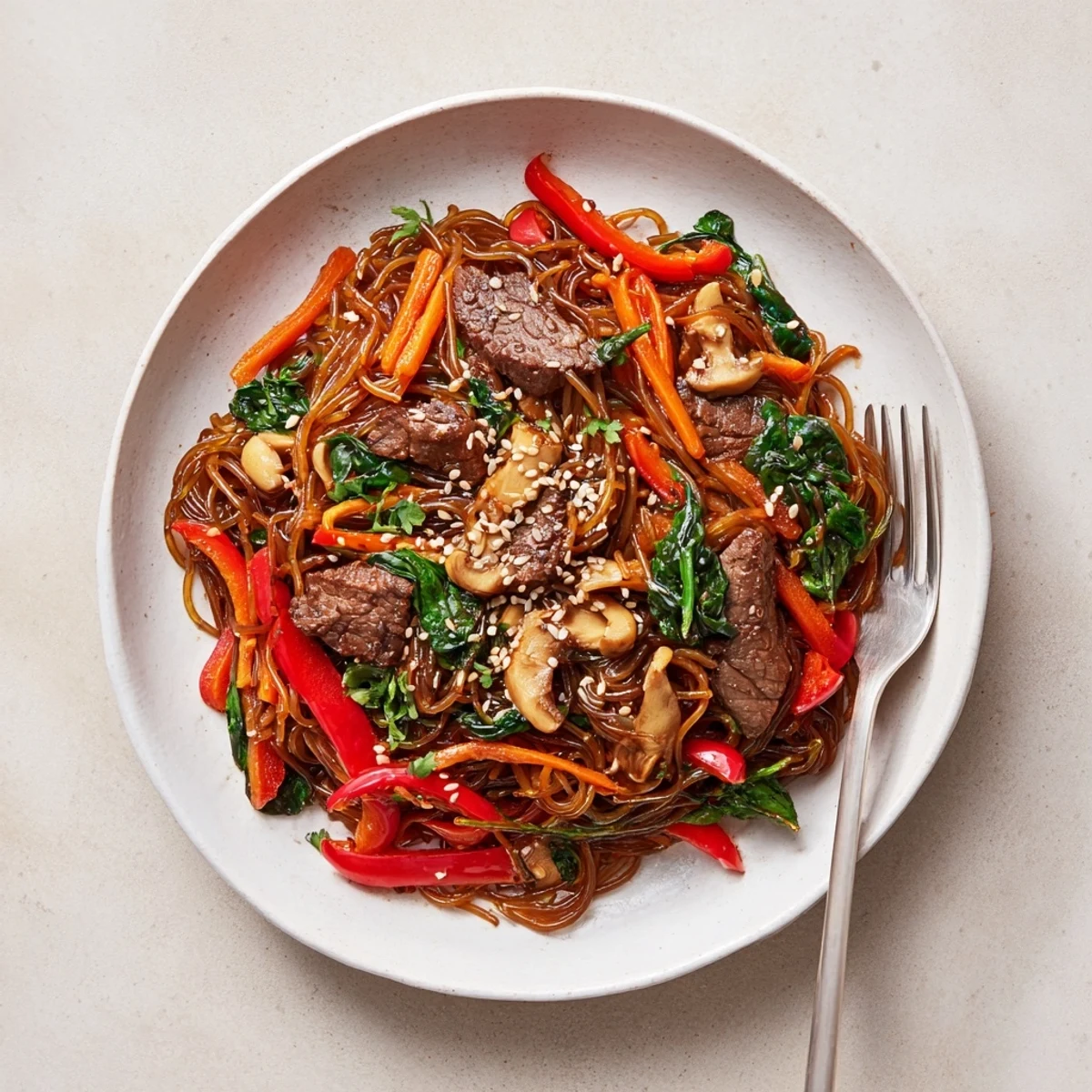
 This dish brings together tender marinated beef, crisp colorful vegetables, and chewy sweet potato noodles coated in a rich Korean-inspired sauce. The balance of savory soy, sweet brown sugar, and spicy gochujang creates depth and complexity.
Perfect for weeknight dinners, this meal comes together in just 40 minutes from start to finish. The noodles develop their signature chewy texture while soaking up the flavorful sauce, and quick stir-frying keeps the vegetables vibrant and slightly crisp.
The steam rising from the wok hit me first—sesame oil and something sweet catching in the back of my throat before I even saw the noodles. My roommate stood there, tongs in hand, looking impossibly pleased with herself for what she claimed was just throwing things together. That first bite changed everything about how I thought weeknight dinners could taste.
Ive made these noodles for exhausted friends after long days, for lazy Sunday lunches when we needed something comforting but not heavy, and once for a potluck where three different people asked for the recipe before dessert was served. Something about chewy noodles coated in that glossy sauce makes people feel taken care of.
Ingredients
- 350 g beef sirloin or ribeye, thinly sliced: Freezing the meat for 30 minutes makes it so much easier to slice paper-thin against the grain
- 1 tbsp soy sauce, 1 tsp sesame oil, 1 tsp sugar, 1 garlic clove: This quick marinade tenderizes the beef while building layers of flavor
- 300 g Korean sweet potato noodles or dried udon: Dangmyeon has that signature chew, but udon works beautifully if thats what you can find
- 1 medium carrot, 1 red bell pepper, 100 g mushrooms, 100 g baby spinach, 2 spring onions: The vegetables add crunch and color—cut them uniformly so they cook evenly
- 3 tbsp soy sauce, 1 tbsp brown sugar, 1 tbsp gochujang: Gochujang is non-negotiable for that authentic Korean depth, but start with less if youre sensitive to spice
- 1 tbsp rice vinegar, 2 tsp sesame oil, 1 tbsp water, 1 tsp grated ginger: Fresh ginger matters here—jarred ginger just doesnt have the same brightness
- 1 tbsp toasted sesame seeds, 2 tbsp fresh cilantro or parsley: These garnishes make the final dish look as good as it tastes
Instructions
- Let the beef soak up flavor:
- Combine the sliced beef with soy sauce, sesame oil, sugar, and minced garlic in a bowl, letting it rest for at least 10 minutes while you prep everything else
- Cook the noodles until perfectly chewy:
- Boil them according to the package directions, then rinse under cold water to stop the cooking and keep them from clumping together
- Whisk together the sauce:
- Mix the soy sauce, brown sugar, gochujang, rice vinegar, sesame oil, water, and ginger until the sugar dissolves completely
- Get some color on the vegetables:
- Heat your wok over medium-high heat, add a splash of oil, and stir-fry the carrot, bell pepper, and mushrooms until they start to soften but still have crunch
- Add the delicate greens:
- Toss in the spinach and spring onions for just a minute or two until they wilt, then move everything to a plate so the wok is ready for the beef
- Sear the beef until it browns:
- Cook the marinated beef in the hot wok for 2 to 3 minutes, letting it develop a nice color without overcrowding the pan
- Bring it all together:
- Add the vegetables, noodles, and sauce back into the wok, tossing everything for 2 to 3 minutes until the sauce coats each strand evenly and everything is heated through
- Finish with a flourish:
- Serve the noodles in bowls and sprinkle generously with sesame seeds and fresh herbs
 Pin It
 My friend once told me that Korean beef noodles were her go-to after breakups, good news, bad days, and random Tuesday nights when she just needed something warm and uncomplicated. I get it now—some dishes just understand what you need.
Getting The Noodle Texture Right
The secret is rinsing those noodles under cold water immediately after draining them. It washes away excess starch so they dont turn into a sticky clump, and it shocks them to stop the cooking process exactly where you want it. Trust me on this— I skipped this step once and ended up with a gluey mess that no amount of sauce could save.
Adjusting The Heat Level
Gochujang brings a mild, fermenty warmth rather than sharp heat, but spice tolerance varies so much from person to person. Start with half the amount if youre unsure, then taste and add more. You can always increase the spice, but you cant take it back once its in there.
Making This Your Own
Some nights I add zucchini or snap peas for extra crunch. Other times I swap the beef for marinated tofu when I want something lighter. The sauce works beautifully with whatever you have on hand, which might be why this recipe has stuck around in my rotation for so long.
- Firm tofu pressed for 15 minutes makes an excellent vegetarian alternative
- Leftover sauce keeps in the fridge for a week and tastes amazing on grilled meats or roasted vegetables
- Double the vegetable portions if you want to stretch this to feed six people
 Pin It
 These noodles have become my answer to what should I make for dinner when I want something that feels special but doesnt require hours of effort. Hope they become a staple in your kitchen too.
Recipe FAQs
- → What type of noodles work best?
-
Korean sweet potato noodles (dangmyeon) are traditional and provide the ideal chewy texture. Dried udon noodles make an excellent substitute with similar thickness and texture.
- → Can I make this dish spicy?
-
Adjust the heat by increasing the gochujang amount or adding Korean chili flakes. The base recipe includes a mild warmth that builds flavor without overwhelming spice.
- → What cut of beef is ideal?
-
Beef sirloin or ribeye works beautifully when thinly sliced against the grain. These cuts remain tender during quick stir-frying and absorb the marinade flavors effectively.
- → How do I prevent noodles from sticking?
-
Rinse cooked noodles under cold water to remove excess starch, then toss with a small amount of sesame oil before combining with the sauce and vegetables.
- → Can I prepare components ahead?
-
Marinate the beef several hours in advance and chop vegetables beforehand. Cook noodles fresh and combine everything just before serving for the best texture and flavor.